A pet turf yard that smells clean at 8 AM and unbearable by 2 PM is a chemistry failure on a schedule, not a cleaning one. Dog urine carries water, urea and uric acid: on synthetic grass the water and urea rinse away while the uric acid crystallises into a form water cannot dissolve. Those crystals bind to the fibres, the backing and the stone, bacteria feed on them, and afternoon heat speeds the ammonia off-gassing. Two routines deal with it: a weekly wash-down, and a 48-hour tarp rescue for a saturated yard.
The Chemistry Behind the 2 PM Smell
On soil, microbes process dog urine unaided. On artificial grass the water and urea wash away, but the uric acid stays and crystallises. These crystals are completely non-soluble in water: they bind to the synthetic fibres, the polyurethane backing and the base rock below, and rinsing will not remove them.
Bacteria digest the crystals, and the breakdown releases ammonia gas — the eye-watering smell that clears a patio. Heat is the accelerant: the afternoon sun bakes the surface, and the off-gassing climbs with temperature.
The Weekly Wash-Down Routine
Prevention is a schedule, not a product: five jobs at fixed intervals keep waste moving into a base that can carry it away. In Boise, ID the schedule just has to be kept through the hottest weeks.
| Task | Cadence | What it does |
|---|---|---|
| Scoop and dispose of solid waste | Every time | Removes the raw material before bacteria feed |
| Rinse the urine corners | 30 seconds per corner, two to three times a week in multi-dog yards | Flushes fresh urea and soluble waste through the backing |
| Rinse urine spots on a weekly cycle | Weekly | Prevents odour and salt build-up in the zones your dog uses most |
| Brush the blades upright | As paths flatten, heaviest traffic first | Lifts matted fibres and redistributes the infill |
| Top up the infill | Every year or two in heavy-use areas | Replaces displaced infill so blades stand and the surface drains |
What a Hose Alone Cannot Reach
Three layers matter.
The backing. Standard turf's hole-punched backing lets urine pool between the holes; pet turf uses a fully permeable, edge-to-edge flow backing that drains instantly.
The fabric. A non-woven geotextile belongs at the very bottom of the excavation, where it separates soil from clay migration. Laid directly under the turf backing instead, it behaves like a felt pad: it absorbs urine and locks the smell millimetres below the surface.
The base. Open-graded stone such as #57 crushed stone or CA7 clean gravel is washed free of fines, and compacted angular stone keeps roughly 40% open void space. Dense-graded material such as Class II road base, CMB or decomposed granite is packed with clay and sand; compacted, it becomes a crust that traps liquid.
The 48-Hour Rescue for a Saturated Yard
Where the smell is baked in, a spray or enzyme alone will not do it: enzymes chop odour molecules and leave the waste behind, so the smell returns once the surface is hot or wet. Live microbes digest the uric acid crystals instead, converting them into odourless carbon dioxide and water.
- Dampen and mix: mix a heavy-duty live microbe cleaner in a pump sprayer at one part concentrate to four parts water.
- Apply at dusk: drench the area so the cleaner flows through the backing into the stone. Extreme heat kills the microbes.
- Tarp it: lay a heavy dark plastic tarp over the wet turf, cut to the hotspot footprint plus 2 ft each side, and weigh it down.
- Dwell, then rinse: leave the tarp 24 to 48 hours, then pull it off and rinse.
The tarp is not optional: microbes need moisture and the air dries the ground fast, so trapping humidity turns it into an incubator. Budget roughly 1.5 gal per 100 sq ft and work in sections.
The Never-Do List
Most expensive pet-turf mistakes come from products that work fine indoors:
- Indoor cleaners and high-foaming soaps. They leave a sticky residue in the stone base that turns grass grey.
- Bleach. It does not break down the crystals and it degrades the polyurethane backing, voiding the warranty.
- Vinegar as a fix. A deodoriser, not a cure: it masks ammonia temporarily without digesting the crystals.
- Enzyme-only sprays on a saturated yard. The waste stays put and the smell returns.
- Weed fabric under the backing. A felt-like barrier beneath the grass instead of at the bottom of the excavation is a urine trap.
Where a Match Comes In
Cleaning is the part a homeowner can run alone; rebuilding is not. If the smell survives the saturation routine, the fault is in the base aggregate, the fabric placement or the excavation depth — which means lifting the surface.
This site is an independent matching service, not a provider: we do not employ contractors, sell turf or build, inspect or guarantee the work. The service is free. Describe the yard, receive up to 3 matches from id-licensed local pros within one business day, and compare their written scopes — where they place the weed barrier, which aggregate they specify. No commissions, no markup, no obligation.
Frequently asked questions
Why does pet turf smell worse in the afternoon?
Heat accelerates the reaction: uric acid crystals in the turf are digested by bacteria, releasing ammonia gas, and past 140°F in direct sun the rate of decay and off-gassing climbs.
How often should pet turf be rinsed?
Scoop solid waste immediately. Rinse the urine corners 30 seconds each, two to three times a week in a multi-dog yard, and rinse urine spots weekly. Brush flattened paths and top up the infill every year or two.
Will an enzyme spray fix a strong pet odour?
Not on a saturated yard. Enzymes chop odour molecules temporarily and leave the waste in place, so the smell returns when the surface is hot or wet again. Live microbes digest the crystals themselves.
What is the 48-hour tarp method?
Drench the turf at dusk with a live microbe cleaner mixed one part concentrate to four parts water, lay a dark plastic tarp over the wet area and weigh it down, leave it 24 to 48 hours, then remove the tarp and rinse.
Sources
- Boise Artificial Turf Pros — turf odour rescue explainer (the 48-hour saturation and tarp routine)
- Boise Artificial Turf Pros — multi-dog turf odour prevention and deep-cleaning checklist
- Boise Artificial Turf Pros — artificial turf problems: pet urine damage
- Boise Artificial Turf Pros — turf knowledge quiz (rinse cadence, backing and infill answers)
Related
Artificial Turf services in Boise
Boise Artificial Turf Residential Turf
A residential turf installation is a drainage and sub-base project that ends in a lawn, and the published numbers only make sense once you know which of the two you are paying for.

Boise Artificial Turf Pet Turf
Pet turf is judged by what happens underneath it, not by how the blades look, and the published specification is a deeper, fully draining base plus an infill that changes the chemistry of the yard.
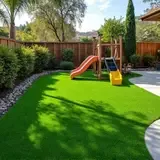
Boise Artificial Turf Playground Turf
A playground surface is bought for one number - the fall height it is rated to - and everything else about the installation serves that number.
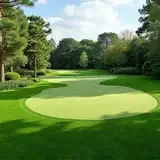
Boise Artificial Turf Putting Greens
A backyard putting green is a shaped base with a surface stretched over it, and the published specification starts with the speed number the surface has to deliver.
Boise Artificial Turf Commercial Turf
Commercial turf is published as a high-traffic, high-drainage surface, and the two numbers that decide whether it works are the annual hours it is rated for and how fast the base sheds water.
Areas we serve
Boise
Artificial Turf in Boise, ID - costs, water and soil notes.
Meridian
Artificial Turf in Meridian, ID - costs, water and soil notes.
Nampa
Artificial Turf in Nampa, ID - costs, water and soil notes.
Caldwell
Artificial Turf in Caldwell, ID - costs, water and soil notes.
Eagle
Artificial Turf in Eagle, ID - costs, water and soil notes.
Kuna
Artificial Turf in Kuna, ID - costs, water and soil notes.
Star
Artificial Turf in Star, ID - costs, water and soil notes.